Scheduling is not "just a feature".
Reliable publishing needs a dedicated reliability layer.
That layer is Postproxy.
Platform APIs
Each platform's unique endpoints, rate limits, and constraints handled automatically
Replace multiple platform APIs with one unified interface for publishing and analytics
curl -X POST "https://api.postproxy.dev/v1/posts" \ -H "Authorization: Bearer YOUR_API_KEY" -H "Content-Type: application/json" \ -d '{ "content": "Hello World!", "media": ["https://someurl.com/happyface.jpg"], "accounts": [777, 778] }On the surface, it's just "publish later". In practice, scheduling becomes one of the hardest parts to build and maintain.
Teams underestimate scheduling until it starts breaking. What should be automation quickly turns into edge cases, retries, and manual fixes.
Scheduling is not "just a feature".
Reliable publishing needs a dedicated reliability layer.
That layer is Postproxy.
A single request replaces platform-specific logic, limits, and failures.
Each platform's unique endpoints, rate limits, and constraints handled automatically
Content automatically transformed to match each platform's requirements
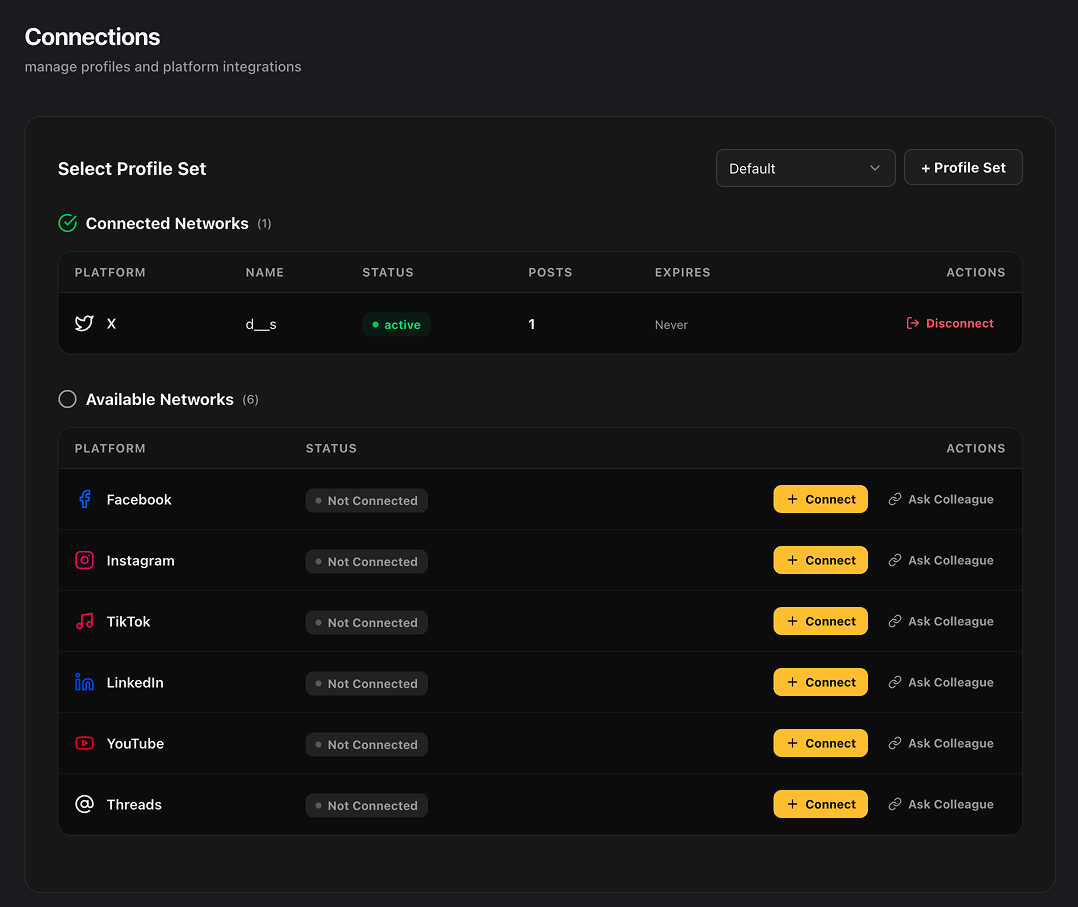
OAuth flows, token storage, and automatic refresh managed for you
Automatic retries, rate limit handling, quota awareness, and clear publish state reporting.
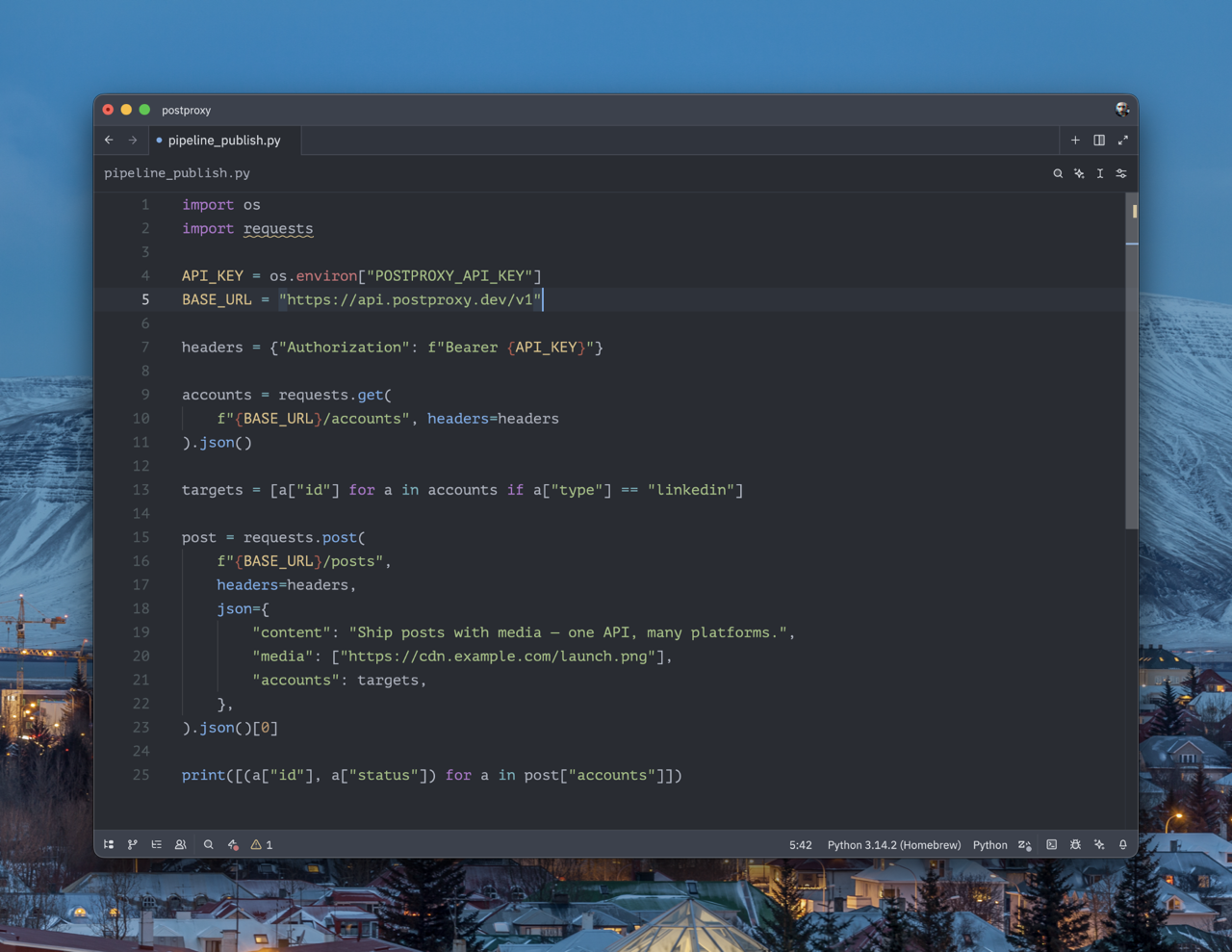
A minimal setup to integrate Postproxy into your publishing pipeline.
Your publishing pipeline is already automated. Content is generated by LLMs, agents, or scripts and triggered by scheduled jobs, webhooks, or event driven workflows built with tools like n8n, Zapier, or custom automation.
Everything works until content needs to be published.
At that point, publishing becomes the least reliable part of the system. You end up normalizing AI generated output for every social platform, maintaining separate SDKs and API integrations, debugging partial failures and silent drops, and manually verifying what was actually published.
What should be a single pipeline step turns into a growing collection of platform specific edge cases, glue code, and operational checks inside an otherwise automated system.
One integration that turns publishing into a predictable infrastructure layer across platforms.
You always know what succeeded, what failed, and why. Automatically and without manual checks.
Retries, rate limits, and quotas are first class concepts, not error cases.
Publishing ten items or ten thousand follows the same deterministic logic.
One integration that stays stable even when social platforms don't.
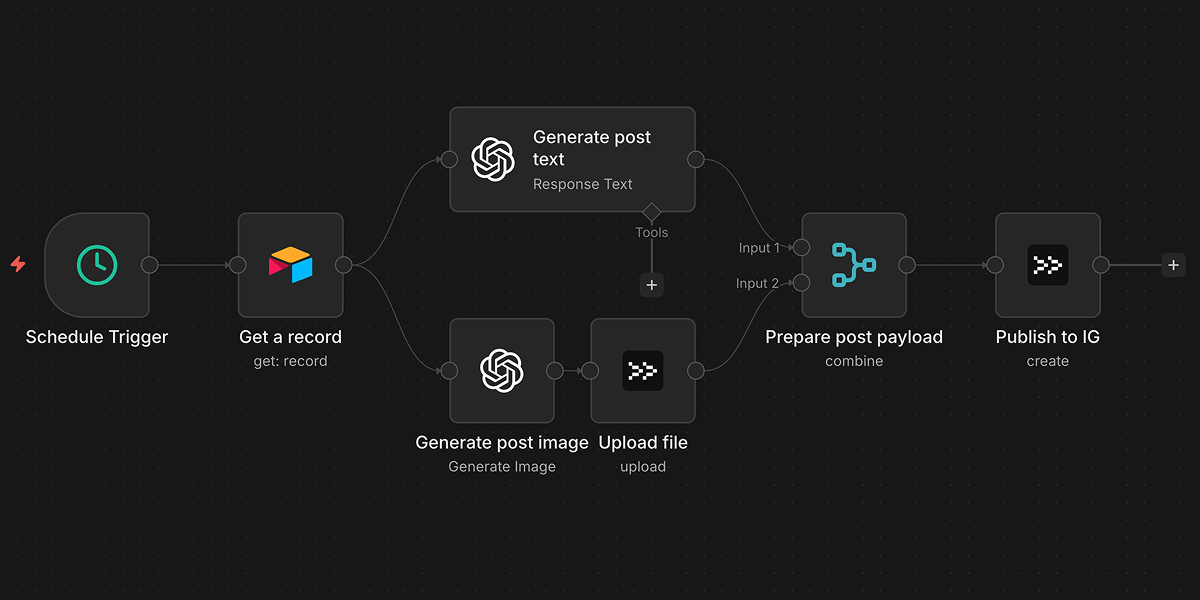
PostProxy is designed for people who automate systems. It is not another UI tool. It is a publishing primitive you can drop into production-grade n8n workflows. Generate content, enrich it with AI, upload assets, decide where to publish and let PostProxy handle the final mile.
No manual steps or platform-specific logic. Just one fully automated pipeline.
If it fits into an n8n workflow, it can be published:
Automate content creation from LLMs and AI agents, then publish seamlessly across platforms without manual intervention.
Connect your content management system to social media. When content is published in your CMS, automatically share it across networks.
Manage multiple social media accounts and brands from a single workflow. Route content to the right accounts automatically based on your rules.
Automate product launches and updates. Trigger announcements from your release pipeline, CI/CD, or version control system.
Generate localized versions of the same post using AI. Publish each language to the correct accounts based on simple routing rules.
Collect internal updates, changelogs, or blog posts. Generate a weekly summary and publish it to multiple social channels without manual editing.
Start with our free plan and scale as your needs grow. No credit card required.